






Municipal energy - briefing sheet

In February 2017, the Institution of Civil Engineers (ICE) published a briefing sheet focusing on municipal energy transmission, retailing, and legislation, associated issues and the role of local authorities in energy distribution.
Councils are increasingly taking a lead role in the municipalisation of energy by implementing innovative energy schemes to reduce costs, provide value for money, generate income and address fuel poverty.
The briefing paper provides an overview of some of the issues associated with municipal energy and focuses on the UK, with its unique history relating to energy transmission, retailing and legislation.
The transmission of electricity is not a straightforward process and the transmission network can become constrained by a number of factors such as voltage issues, thermal issues, fault levels, power quality and reverse power flow. The situation is complicated by energy now also being distributed locally and entering the grid at a variety of different levels and at different scales.
Some of these network constraints are being addressed through the evolution of smart grids which employ communications, innovative products and services together with intelligent monitoring and control technologies. The timescale for and cost of grid connections are a major issue for businesses.
However, the difficulty of obtaining a grid connection has led to the creation of innovative solutions. One such solution for The Museum of Liverpool - which essentially is located on an island, cut off from the mainland by water, docks and a canal - was to create a tri-generation energy centre that provides heat, electricity and cooling.
The briefing paper provides an introduction to the role local authorities have played with regard to the distribution of energy and their current interests in this agenda around both infrastructure and energy retailing.
Many councils such as Peterborough, Nottingham and Liverpool are using innovative solutions and developing renewable energy alternatives to fossil fuels. By doing this, they are delivering value for money for local council tax-payers, generating income and addressing fuel poverty through reduced energy bills for residents.
The document provides information on:
- Generation and transmission.
- Grid connections.
- Utility companies.
- Municipal energy companies.
- Other sources of renewable energy.
- Balancing and trading.
- Drivers for change.
- Demand and storage.
It also contains links to case studies including:
To download the briefing sheet, go here.
This article was originally published on 15 Feb 2017 by ICE. It was written by Rabinder Phull.
--The Institution of Civil Engineers
[edit] Related articles on Designing Buildings Wiki
- A technical guide to district heating (FB 72).
- Articles by ICE on Designing Buildings Wiki.
- Big growth in district heating markets - now and on the horizon.
- Combined heat and power.
- Community energy network.
- District energy networks.
- DC electricity networks.
- Heat sharing network.
- National heat map.
- The Future of Electricity in Domestic Buildings.
Featured articles
Check out some of the best features and news from Designing Buildings as well as key stories from around the web.

Government brings British Steel into public ownership.
UKCW Birmingham returns with bold new theme and focus.

New guidance published on competence requirements for self-certification schemes.
Construction Management, 8 July

NEETs crisis drives interest in trades, but apprenticeships barriers remain.
Passive fire protection webinar
MEP services penetration seals.

Where its at podcast (and video) - The role of the Architectural Technologist as an Expert Witness.
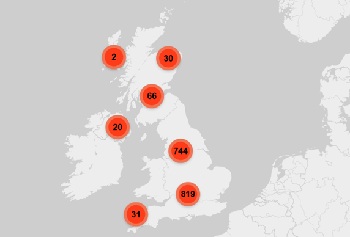
More than 200 remarkable buildings added to SAVE’s Buildings at Risk register.

Government scraps pre-application consultation for Nationally Significant Infrastructure Projects.
Historic England and infrastructure
New projects offer opportunities for the historic environment and local communities.
Construction Management, 2 July

Construction deaths halve in two years.
Green Book changes to drive investment in all parts of UK.
Minimum energy efficiency standards (MEES)

CIAT briefing on response to consultations for privately rented non-domestic properties.